
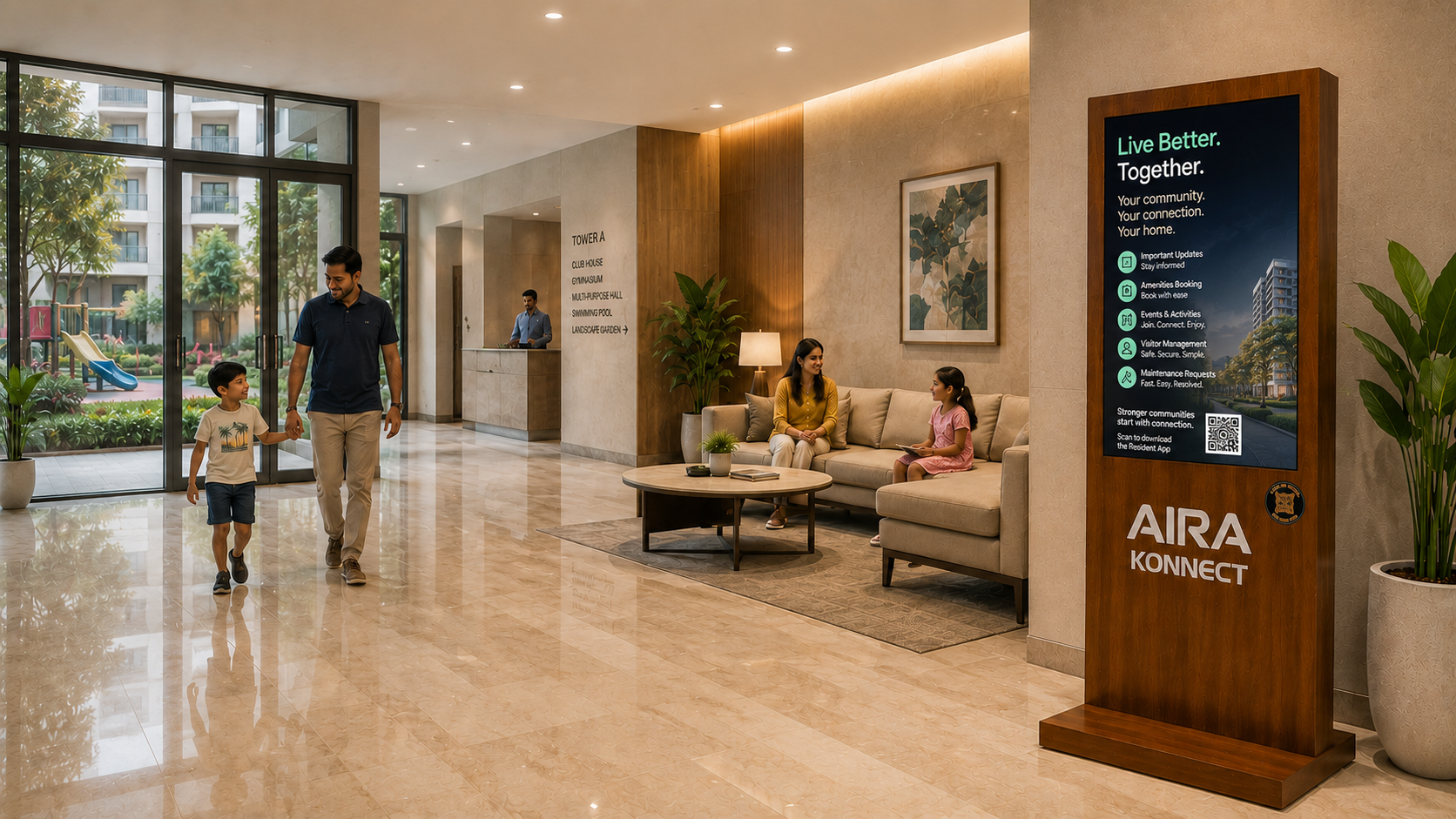
Apartment lobby advertising places a brand in shared residential areas such as lift waiting zones and clubhouses. It can be relevant to a business that serves nearby households. The useful question is not whether lobby ads “beat” every other channel; it is whether the available communities match your customer catchment and whether the screen plan supports your campaign goal.
Start with a map of your real customers
List the neighbourhoods from which your customers already travel, or where you need to become known. A local clinic, school, jewellery store or home-interiors company may each have a different catchment. Ask for current community availability within that area, then review actual screen locations inside those properties.
Do not infer that every resident has the same income or will see every ad play. Ask what the operator knows, how it knows it and which claims are estimates.
Check the screen buying details
For each proposed venue, request the community name and locality, screen position, booking dates, operating hours, creative dimensions, ad-loop structure and reporting deliverables. If a venue cannot be named publicly, ask for enough detail privately to judge its fit before booking.
The quote should explain whether you are paying per screen, per community or for a package. Clarify creative production, replacements for downtime and changes during the campaign. Use the DOOH pricing checklist to compare proposals consistently.
Make the brand memorable
Residents may encounter a lobby screen during an ordinary routine. That gives the creative a simple job: make the brand name, category and local relevance easy to recognise. A strong example might be “[Brand] · Dental care near [neighbourhood] · Book a visit.” Use the real service and location; do not fill the ad with every offering.
For a brand-building campaign, keep the core name and visual identity consistent across venues and across your other marketing. For a response campaign, add one clear next step such as a short URL or a venue-specific offer. Both can coexist, but too many messages weaken the ad.
Measure what happened
Ask for playback evidence and a clear distinction between ad plays and estimated audience. Record branded searches, direct enquiries, appointment requests and customer-source answers in the targeted neighbourhoods. If you use QR codes or offer codes, review whether resulting enquiries were relevant. A scan is an action; it is not by itself a sale or proof of incremental lift.
Apartment screens and social advertising may work together. Physical placements can keep a brand familiar locally, while social ads can answer a detailed question or bring someone back to a booking page. Read the channel comparison for that decision.
To plan a residential test, review Aira Konnect's apartment advertising page and request a current community list for your specific Hyderabad catchment.