
Back to Blog

Restaurant Waiting Areas: The Most Underrated Local Space

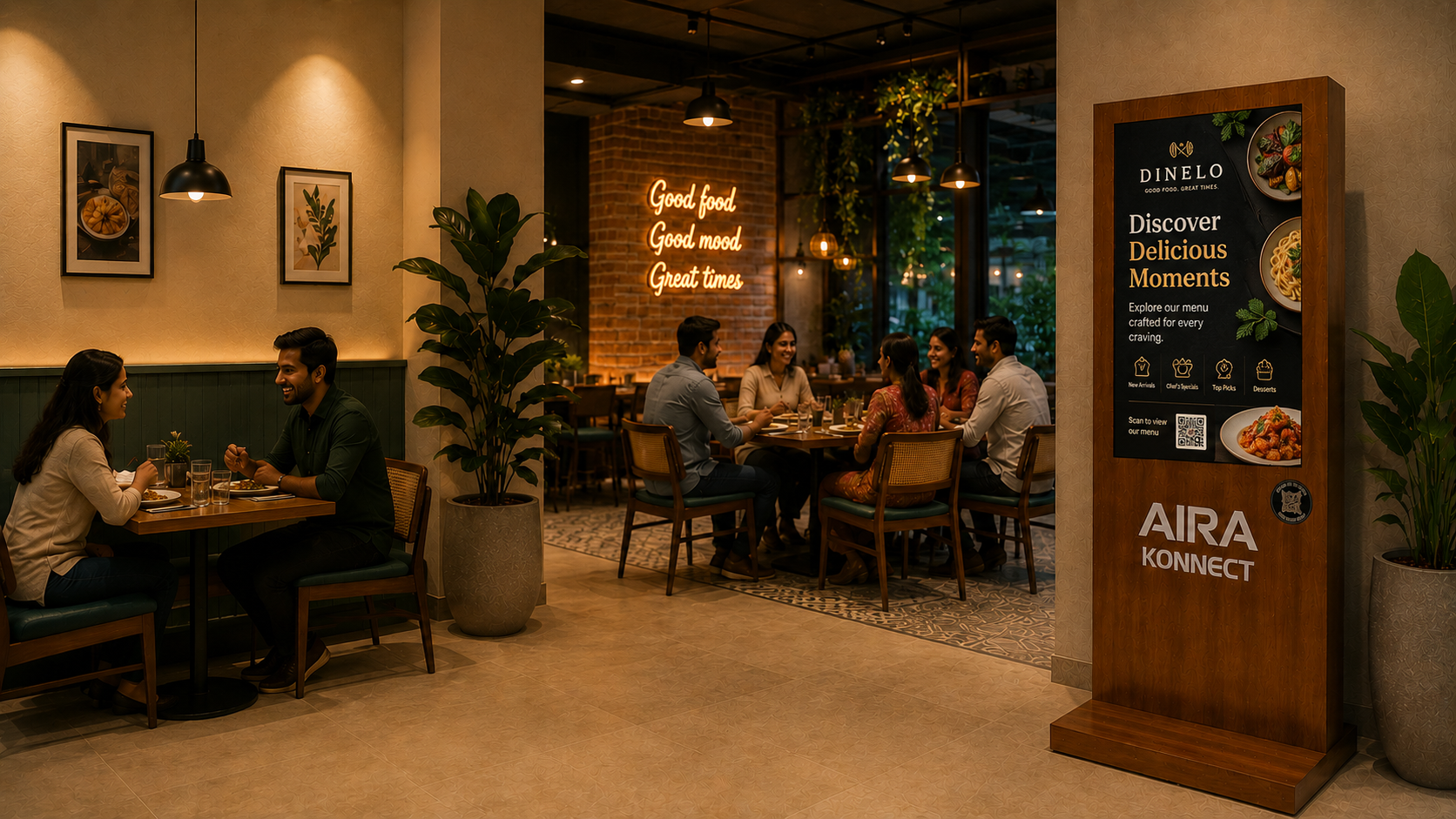
Digital screen advertising in a restaurant waiting area — AiraKonnect restaurant DOOH network
Share

Ready to launch?

Get your brand on premium screens today.

Start Campaign

TL;DR: Restaurant waiting areas are high-value ad spaces because guests spend 10–20 minutes with little to do, in a relaxed, spending-ready mindset. Screens near the hostess desk, billing counter, and dessert counter reach a premium local audience — and DOOH placed in such venues enjoys 82% average viewability (Clear Channel).

Why is restaurant waiting area advertising so effective?

Because it captures the rarest thing in advertising: undivided attention. A guest waiting for a table or a bill has a natural pause with nothing competing for their eyes, so a well-placed screen becomes the most interesting thing in view. Attention isn’t stolen — it’s willingly given.

Context amplifies this. Clear Channel’s research found contextually relevant DOOH increases campaign effectiveness by up to 17%, and diners at a premium restaurant are, by definition, people actively spending on experiences nearby. Compare that with mobile ads: 52% of consumers say they notice digital signage more than online advertising (Nielsen), largely because the phone environment is saturated and the restaurant environment is not.

Which zones inside a restaurant deliver the most ad visibility?

The best placements sit where guests pause, not where they walk. Four zones consistently outperform the rest because dwell time there is measured in minutes, not seconds — enough for a full creative loop to play two or three times.

  • Hostess desk / entry: arriving groups wait here longest, especially on weekends — the highest-dwell zone in the venue.
  • Billing counter: guests are settling payment, a moment of financial attention that suits offers and premium services.
  • Dessert or takeaway counter: impulse-friendly mindset; strong slot for food brands, gifting, and events.
  • Rooftop or lounge entry: a premium, unhurried audience with time to absorb longer brand stories.

What kind of brands should advertise in restaurant waiting areas?

Brands whose customers overlap with diners: boutiques, salons and clinics, real-estate projects, co-working and office spaces, weekend experiences, dessert and beverage brands, and premium local services. If your customer eats out in this neighbourhood, this screen already has their attention.

Restaurant audiences also act on what they see. Across DOOH formats, 76% of consumers report taking action after seeing an ad — searching the brand, visiting, or purchasing (OAAA/Harris Poll, 2024). A diner in Jubilee Hills or Koramangala seeing an ad for a boutique two streets away can act on it the same evening.

How does restaurant screen advertising compare with other local options?

FactorRestaurant waiting-area screensRoadside hoardingsSocial media ads
Typical attention windowMinutes (guests are stationary)~3.5 seconds per encounter (Quividi, 2020)Seconds; easily skipped
Audience qualityVerified diners at a known venueBroad, unfiltered trafficModelled interests
EnvironmentRelaxed, spending-readyDistracted, in transitCluttered feed
Ad favorability73% view DOOH favorably (OAAA/Harris Poll, 2024)Same DOOH favorability applies48% favorability (same study)

How should creative be designed for restaurant screens?

Design for silence and glanceability: restaurant screens play muted, so the message must land visually within seconds. Nielsen research shows strong creative with clear branding and bold visuals can roughly double recall versus cluttered, text-heavy designs — a bigger lever than most advertisers realise.

Keep one message per creative, use high contrast, and end with a single clear action such as a QR code or short offer. Our full guide to creative best practices for muted screen environments breaks down the specifics.

A restaurant waiting area is the only ad environment where the audience arrives in a good mood, stays for ten minutes, and has money ready to spend.

Frequently asked questions

How long do guests actually look at waiting-area screens?

Long enough to matter: waiting guests are stationary for 10–20 minutes on busy evenings, versus roughly 3.5 seconds of average attention per encounter with a typical street-facing DOOH screen (Quividi, 2020). Placement inside the pause is the whole advantage.

Can I pick specific restaurants for my campaign?

Yes — campaigns are booked venue by venue, so you can match restaurants to your customer profile by neighbourhood, cuisine, and price segment.

Will my ad compete with the restaurant’s own promotions?

Screen loops are curated with limited advertiser slots per venue, so your creative rotates alongside a small set of non-competing brands rather than being buried in clutter.

How do I know if restaurant screen ads are driving customers?

Use venue-specific QR codes and offers unique to each location. See our framework for measuring ROI on local screen placements.

Want your brand in front of diners across Hyderabad and Bangalore’s most popular venues? Explore AiraKonnect’s restaurant advertising network or get in touch for available screens near your business.

See how these placements work in real-time

Explore our venue network and find the perfect fit for your brand.

Explore Venues →